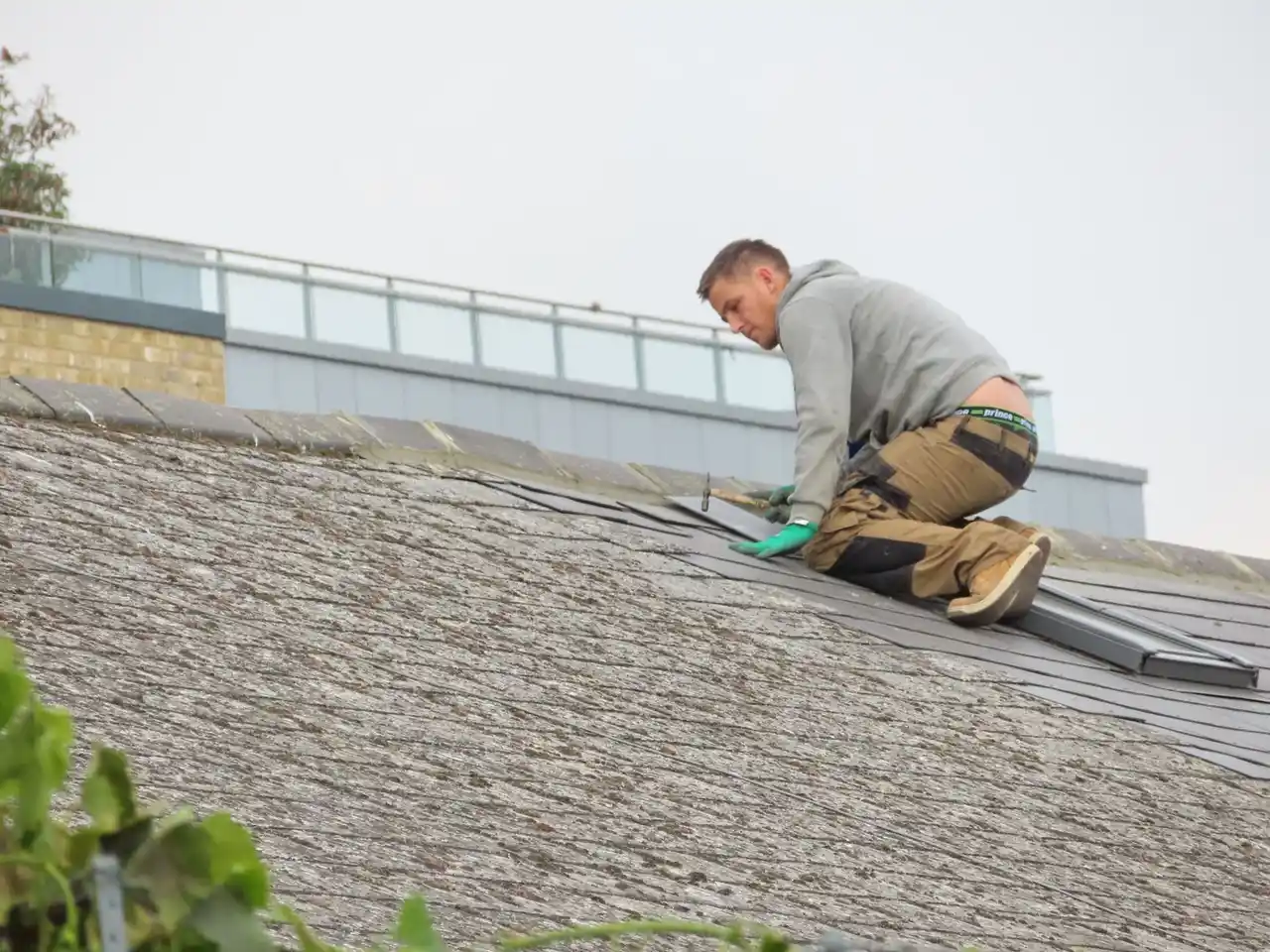
Chimney Flashing Leak Repair
Chimney Flashing Leak Repair Alameda CA That Stops the Drip
Chimney flashing leak repair Alameda CA homeowners can count on starts with finding the actual entry point, not guessing at the ceiling stain. We pull the old step and counter flashing, rebuild the seal against the masonry and shingles, and water-test it the same visit. If your chimney leak repair in Alameda keeps coming back after every rain, the flashing was never the real fix.
Service overview
What Chimney Flashing Leak Repair Alameda CA Involves
Chimney flashing leak repair Alameda CA is a targeted roofing service that rebuilds the waterproof connection where your chimney passes through the roof plane. That joint uses step flashing woven into each shingle course, counter flashing cut into the masonry, and a sealant line that takes the brunt of wind-driven rain. When any layer separates, water runs down the chimney chase and shows up as a ceiling stain far from the actual leak. We remove the failed metal, replace it with aluminum, copper, or galvanized steel flashing, and re-seal the whole assembly.
Most Alameda calls we get start with a brown ring on a bedroom ceiling after the first big storm of the season. Island weather pushes rain sideways, and a 20-year-old sealant bead simply gives up. If you have been searching for chimney flashing leak repair near me Alameda CA and getting patch jobs that fail by spring, the problem is almost always the flashing detail, not the shingles. We diagnose the joint, not the symptom, and that is why the repair holds.

Practical benefits
Why Fix the Flashing, Not the Stain
A ceiling stain is the last thing that happens, not the first. These are the outcomes Alameda homeowners get when the flashing is rebuilt correctly instead of caulked over.
Stops the Leak at the Source
Sealing over a ceiling stain does nothing. We rebuild the step and counter flashing so water sheds at the chimney joint instead of running into the chase. One West Alameda job stopped a leak that had ruined two coats of paint in a single afternoon of hose testing.
Protects the Framing
Water that gets past chimney flashing soaks the sheathing and rafters around the chase. Left alone for a season, that turns into rot and a much bigger bill. Catching it early keeps the repair in the flashing and out of the framing.
Holds Through Winter Rain
Alameda gets its rain in concentrated bursts between November and March. A properly lapped flashing assembly with ice and water shield underlayment handles that load. A caulk bead does not. We build for the storm, not for the dry months.
Keeps the Chimney Usable
A leaking chimney chase can rust the firebox components and damage the masonry over time. Fixing the flashing keeps the chimney dry and serviceable. We also check the crown and cap while we are up there so you are not calling us back for the same corner of the roof.
How service works
How Our Chimney Leak Repair in Alameda Works
Five steps from the first call to a dry ceiling. No mystery, no waiting around for a callback that never comes.
STEP 01
Call and Schedule
You call, we ask what you are seeing and where. Ceiling stain, damp masonry, water in the firebox, all of it helps. We book a window that works for you, usually same-day or next-day for active leaks, and we show up inside it.
Tools and methods
Tools and Methods We Use on Chimney Flashing Repairs
Infrared thermal imaging camera
Shows wet sheathing around the chimney chase as a temperature difference. Lets us confirm the leak path without opening up the ceiling.
Tramex roof moisture scanner
Reads moisture content in the roof deck and underlayment. We use it to map how far the water has spread from the flashing joint.
Hose test sprayer
Applies controlled water to the chimney joint while we watch inside. The fastest way to confirm which flashing layer has failed.
Pry bar and flat bar
Lifts shingle courses and tile without breaking them so we can get at the step flashing underneath.
Caulking gun with silicone and polyurethane sealant applicator
Applies the sealant bead at the masonry joint. We match the product to the metal and masonry so it does not crack out.
Extension ladder and roof harness
Safe access to the roof plane. Every crew member is tied off, and we carry OSHA 10 and 30 certifications.
Drones for roof inspection
Used on steep or fragile roofs where walking the plane would risk damage. Gets us a clear look at the chimney joint before we commit to an access plan.
Step and counter flashing rebuild
The standard repair for a failed chimney joint. Step flashing is woven into each shingle course, counter flashing is cut into the masonry, and the two are lapped so water sheds outward. We build to California Building Code standards.
Ice and water shield underlayment
Applied at the chimney joint before the flashing goes back on. It is the backup layer that catches any water that gets past the metal, which matters in Alameda's wind-driven winter rain.
Controlled hose testing
We run water on the finished assembly before we leave. If it drips, we are still working. This is the step that separates a repair that holds from a patch that fails.
Infrared and moisture meter diagnosis
We use both tools together to confirm the leak source before we quote. A moisture meter tells us how wet, an infrared camera tells us where. Together they point to the flashing or rule it out.
Where this service fits
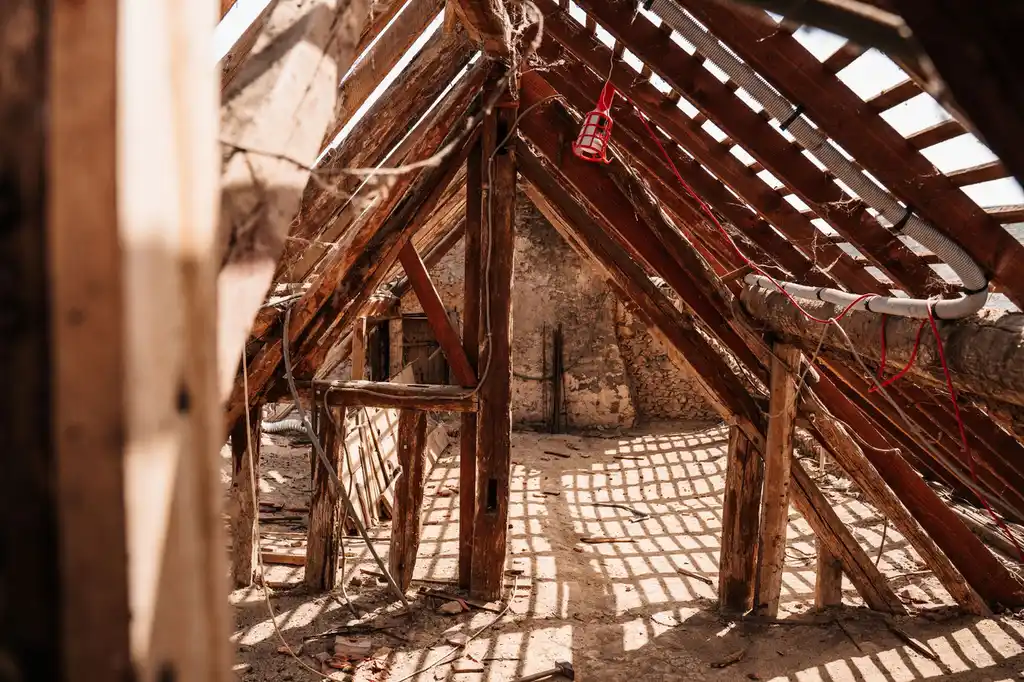
When to Call for Chimney Flashing Leak Repair
A brown water ring appears on the ceiling after the first big storm of the season in a Fernside home.
We get on the roof, hose-test the chimney joint, and confirm whether the flashing or the crown is the source. Most of the time it is a failed step flashing lap that has been leaking slowly for years. The flashing gets rebuilt, the hose test passes, and the ceiling stays dry through the rest of the winter. You repaint once, not every year.
A homeowner on Bay Farm Island notices damp brick on the chimney chase after a windy rainstorm.
Damp masonry usually means water is getting behind the counter flashing. We pull the old sealant, check the metal, and re-seal the joint with a masonry-rated product. The brick dries out, the firebox stays dry, and the chimney does not need repointing from water damage.
A property manager near Park Street has a tenant reporting drips in the firebox during rain.
Water in the firebox points to the chimney crown or the flashing at the top of the chase. We inspect both, confirm with an infrared scan, and repair the failed layer. The tenant stops calling, the unit stays dry, and the repair is documented with photos for the owner.
A homeowner on the East End is selling and the home inspection flagged chimney flashing as a defect.
We do a full inspection, document the flashing condition, and complete the repair to code so it clears the buyer's inspection. The repair is done before closing, the paperwork is clean, and the sale does not get held up over a roof detail.
Local execution
How Chimney Flashing Leak Repair Runs in Alameda
Alameda roofs take a specific kind of beating. The island gets wind-driven rain from November through March, salt air that eats galvanized metal, and summer sun that bakes sealant until it cracks. Older homes near Downtown and the Bronze Coast often have original chimneys with flashing that was installed decades ago and has been caulked over three or four times. Newer construction on Bay Farm Island and Harbor Bay uses different materials but fails the same way at the joint. We work to California Building Code standards and pull the right flashing material for each roof, whether that is copper on a Gold Coast Victorian or aluminum on an East End ranch. If you need chimney flashing leak repair Alameda CA after rain and want it done once, we are on the island most days and can usually get out same-day. We serve the 94501 and 94502 ZIP codes and the neighborhoods in between.
Gold Coast
Older Victorians with tall chimneys and clay tile roofs. The flashing detail is often original and needs careful replacement without breaking tile.
Bay Farm Island
Newer construction with different flashing materials. Wind-driven rain off the bay finds the short laps first.
West Alameda
A mix of older homes and additions. Chimney flashing that was added during a remodel is a common source of leaks.
East End
Mid-century ranches with asphalt shingle roofs. Step flashing that has rusted through is the usual call.
Park Street District
Mixed residential and commercial. We handle chimney flashing on both, with scheduling that fits tenants and business hours.
Salt air corroding galvanized flashing
Galvanized metal rusts through faster on the island than inland. We recommend aluminum or copper on chimney flashing near the water.
Wind-driven winter rain
Rain pushed sideways gets behind short flashing laps. We build the lap to code and add ice and water shield as a backup layer.
Summer heat cracking sealant
The sealant bead at the masonry joint expands and contracts with temperature swings. We use silicone and polyurethane products rated for that movement.
Aging roof underlayment
Older homes around Downtown often have underlayment that has dried out. When we open the flashing, we check it and replace what is failed.
Problems we solve
Chimney Leak Problems We Solve in Alameda
Most chimney leaks we see fall into a handful of patterns. Knowing which one you have is the difference between a repair that lasts and a patch that fails by the next storm.
Ceiling stains that keep coming back after every rain
We hose-test the chimney joint to confirm the flashing is the source, then rebuild the step and counter flashing so water sheds at the roof plane instead of running into the chase. Each wet cycle spreads the stain and soaks more insulation and drywall. Left long enough, the drywall sags and the repair cost doubles.
Rusted or pulled-loose step flashing
We replace the rusted metal with new aluminum or copper flashing, lapped correctly into the shingle courses. The new metal is rated for the marine air and will outlast the roof. Galvanized flashing rusts through in coastal air. Once it perforates, no amount of sealant stops the water. The leak gets worse every season.
Failed sealant line at the masonry joint
We cut out the old sealant, clean the joint, and apply a fresh silicone or polyurethane bead rated for masonry. We also check the chimney crown while we are up there. The sealant bead between the counter flashing and the chimney brick cracks with sun and heat. Water gets behind it and shows up as damp masonry or a firebox leak.
Wind-driven rain pushing past a short flashing lap
We rebuild the lap to California Building Code standards and add ice and water shield underlayment at the joint. The assembly is built for wind-driven rain, not just straight-down drizzle. Alameda winter storms push rain sideways. Flashing that was lapped too short for normal rain fails when the wind gets behind it. The leak only shows up in storms, which makes it hard to find.
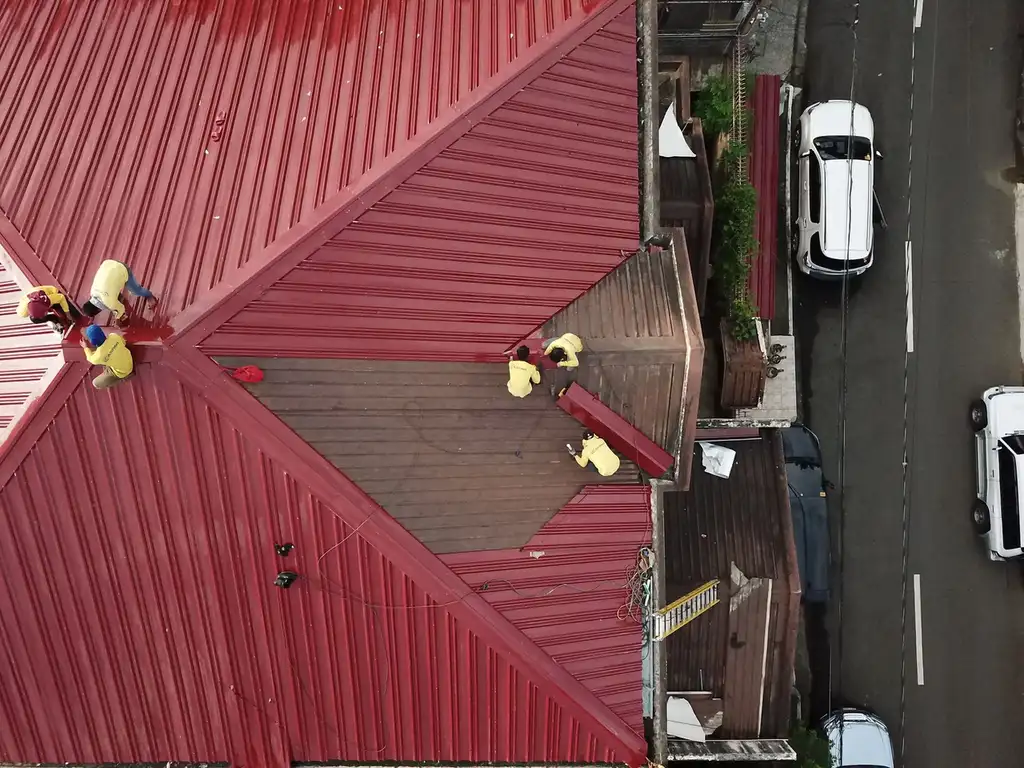
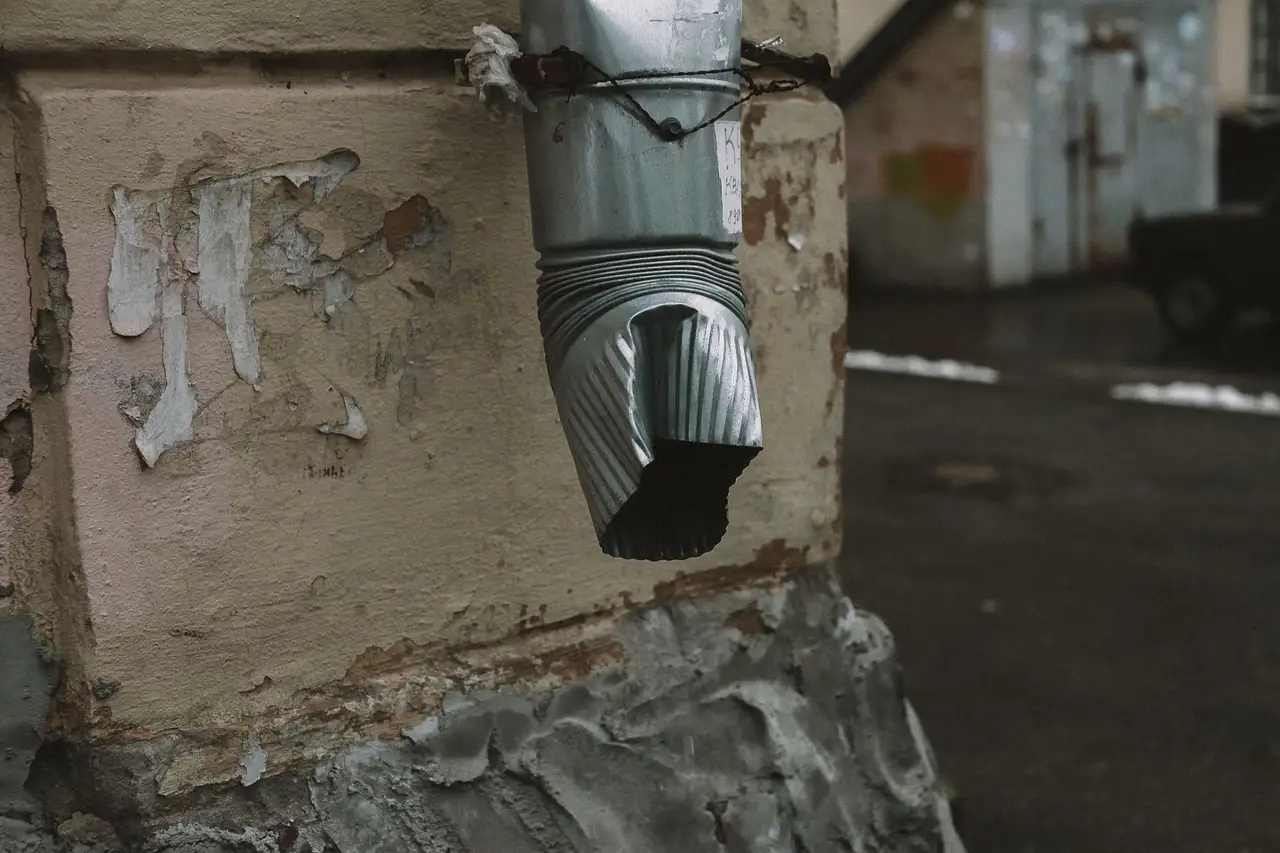
A practical standard for every visit.
Clear planningPrepared arrivalsCareful workLocal follow-through
Experience in the details
Chimney Flashing Contractor Alameda Knows the Detail
Chimney flashing is one of the few roof details where a half-inch mistake shows up as a leak six feet away. Our crew works on Alameda roofs every week, from clay tile on the Gold Coast to asphalt shingles on the East End, and we have rebuilt enough failed flashing to know what holds and what fails by the next storm. We hold a California Contractor License (C-39 Roofing), carry OSHA 10 and 30 safety certifications, and work to California Building Code standards on every repair.
- California Contractor License (C-39 Roofing) with active standing
- OSHA 10 and 30 safety certifications on every crew
- GAF Master Elite and Owens Corning Preferred Contractor credentials
- NRCA membership and California Building Code compliance on all repairs
- Infrared thermal imaging and moisture meter diagnostics on every inspection
Where we work
One local team. A lot of ground covered.
Downtown AlamedaWest AlamedaEast EndFernsideBay Farm IslandHarbor BaySouth ShoreMarina VillageBronze CoastGold CoastAlameda PointPark Street District
Check my address Most chimney flashing leak repairs in Alameda run $450 to $1,200 in 2026, depending on roof pitch, material, and how much of the assembly needs rebuilding. A simple re-seal and re-lap sits at the low end. A full step and counter flashing rebuild on a steep tile roof sits at the top. We give you the number before we start.
The flashing is the usual culprit, but not the only one. Failed step flashing, cracked counter flashing sealant, a deteriorated chimney crown, or a missing rain cap all let water in. Alameda's wind-driven winter rain finds the weakest layer. A hose test and infrared scan tell us which one it is in under an hour.
Sometimes, yes. If the metal is sound and only the sealant line has failed, we can re-lap and re-seal without full replacement. If the flashing is rusted through, pulled loose, or was installed wrong to begin with, replacement is the only repair that holds. We tell you which one you have after the inspection.
Most jobs take three to five hours on site, including the inspection, the rebuild, and the final hose test. Steep roofs, tile, or heavy rot around the chase can push it to a full day. We schedule the window when we book, so you know how much of your day to set aside.
Keep exploring
Other Roof Leak Services We Handle
Your next step is waiting
Get Your Chimney Flashing Leak Repair Alameda CA Scheduled
Water coming through the ceiling does not wait, and neither should you. Call us and we will get a licensed crew on your roof, find the flashing failure, and stop the leak. Same-day scheduling on active leaks.
Start with the basics
call for roof leak repair
Call us any time for an active leak or to schedule an inspection. We answer around the clock for emergencies and can usually get a tech to your door the same day. Tell us what you are seeing and we will take it from there.